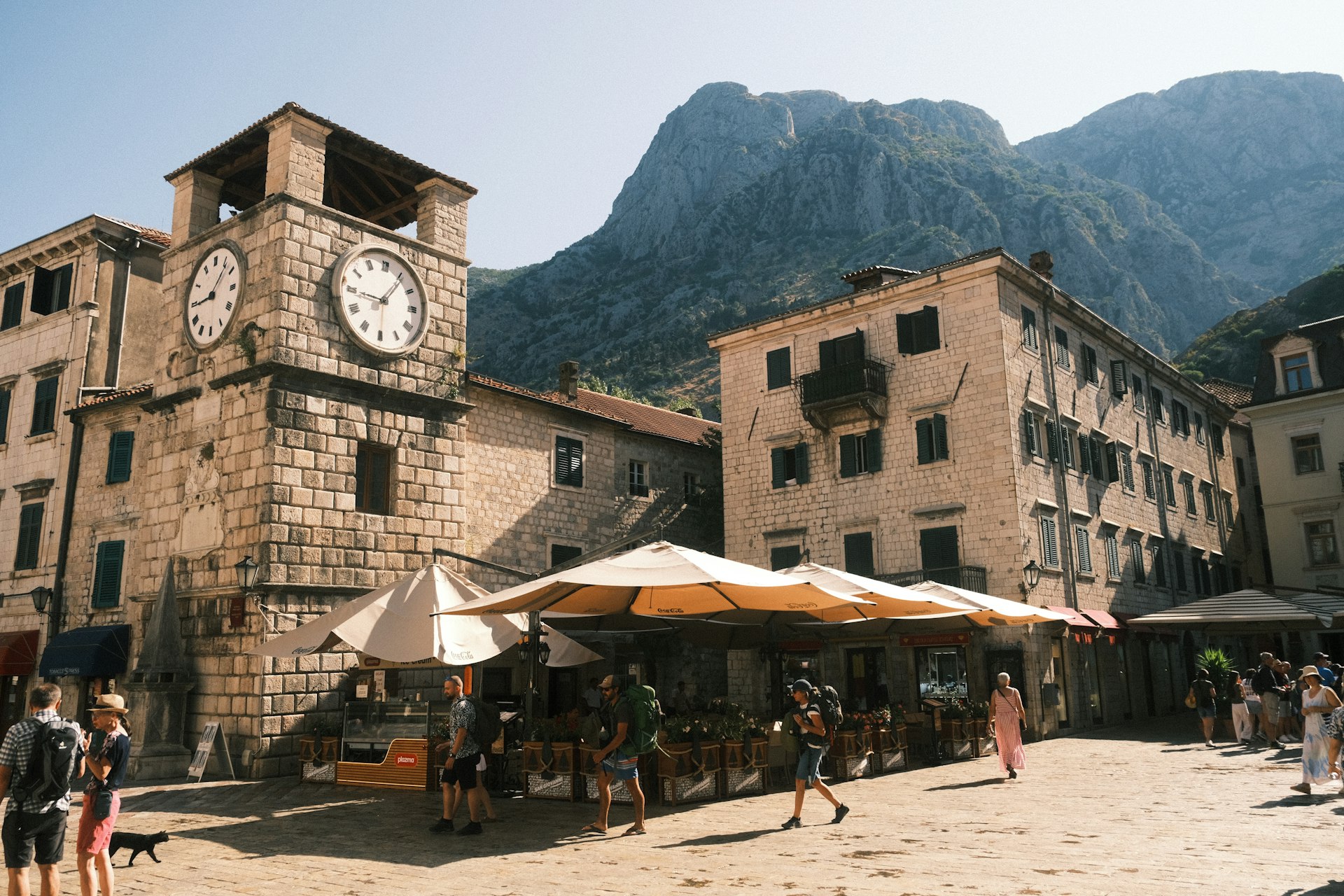
When to visit Kotor? City-Trip Guide

From spring mildness to radiant summer on the bay, Kotor offers a unique atmosphere in every season.

  • 0.023 M population
  • Montenegrin language
  • 93 days rainy days/year
  • May to June best time to visit
  • 3 to 5 days recommended stay

Climate and weather in Kotor

Understanding the humid Mediterranean climate of Kotor

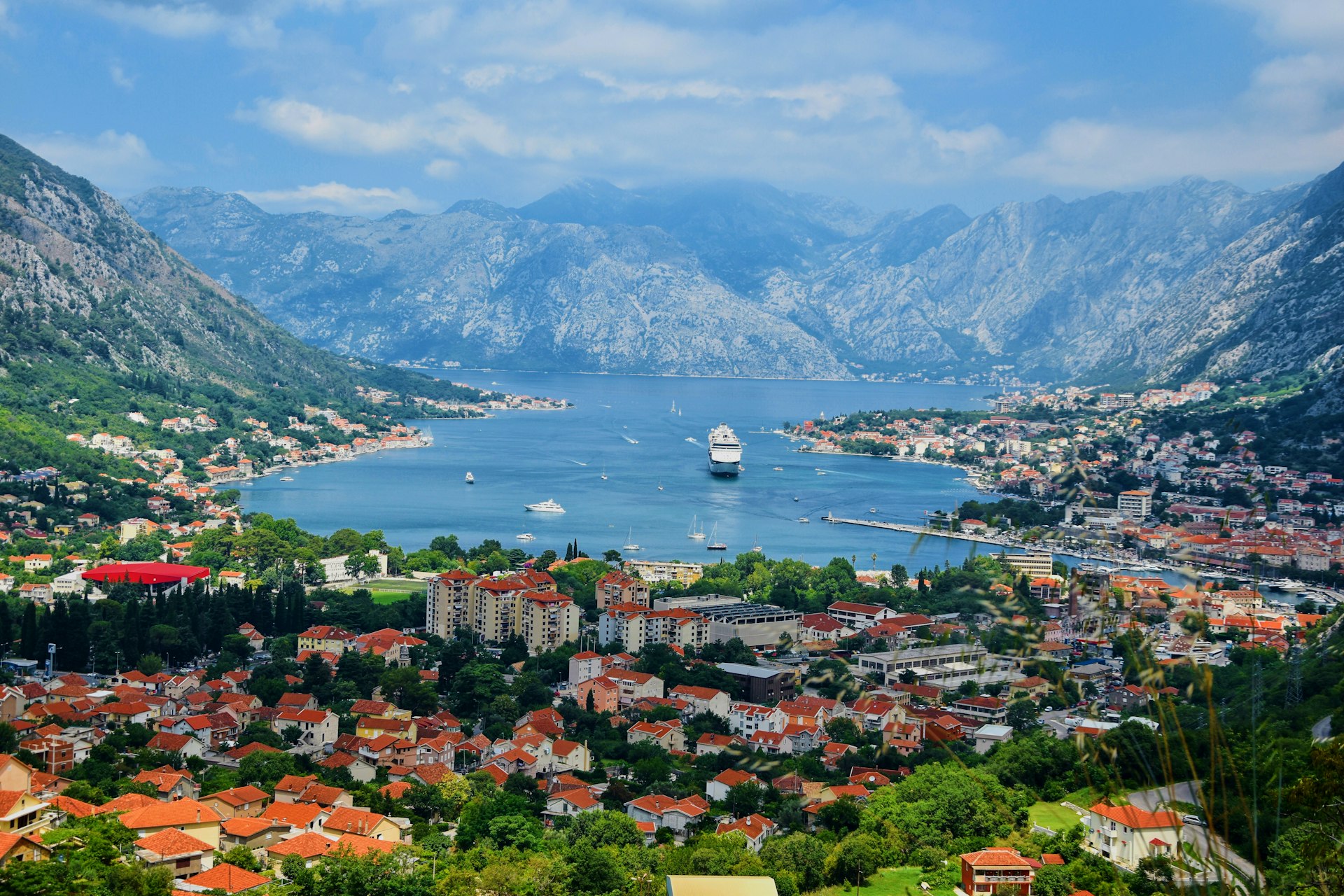
Nestled at the end of the Boka Kotorska Bay, Kotor enjoys a humid Mediterranean climate, influenced by the surrounding mountains and the proximity of the Adriatic Sea. Summers are warm and dry, while winters are mild but particularly rainy, making Kotor one of the wettest cities in Europe.

MonthMin Temp (°C / °F)Max Temp (°C / °F)Precip. (mm)Sun (h/day)Tourist TrafficRecommended Activities
January4 / 3912 / 541804Old town without crowds, museums
February5 / 4113 / 551555Kotor Carnival, local atmosphere
March7 / 4516 / 611306⭐⭐Hiking the walls, bay in bloom
April10 / 5019 / 661057⭐⭐Bay excursions, old town
May14 / 5724 / 75659⭐⭐⭐Ideal for walls, bay walks
June18 / 6428 / 823511⭐⭐⭐⭐Beaches, old town, sunsets
July21 / 7032 / 902512⭐⭐⭐⭐⭐Beaches, festivals, nightlife
August21 / 7032 / 903011⭐⭐⭐⭐⭐Marine Festival, bay, beaches
September17 / 6327 / 81758⭐⭐⭐Pleasant sea, fewer crowds
October13 / 5521 / 701306⭐⭐Hiking, culture, gastronomy
November8 / 4616 / 611954Authentic atmosphere, museums
December5 / 4113 / 551953Christmas markets, festive old town

The seasons in Kotor

Attractions by weather

Whether the weather is radiant or capricious, Kotor always has beautiful surprises in store. Organize your visits according to the day's conditions to make the most of this UNESCO World Heritage medieval city.

☔ In overcast or rainy weather

Indoor and covered passages

Rainy days in Kotor invite you to explore the hidden treasures of the old town, its baroque churches, museums, and Venetian palaces. The fortified city offers many cultural refuges close at hand.

  • Saint Tryphon Cathedral – 12th-century Romanesque masterpiece | 1h | ~2€ | open all year
  • 🏛️ Maritime Museum of Montenegro – history of the Boka Marine | 1h30 | ~4€ | closed Mondays off-season
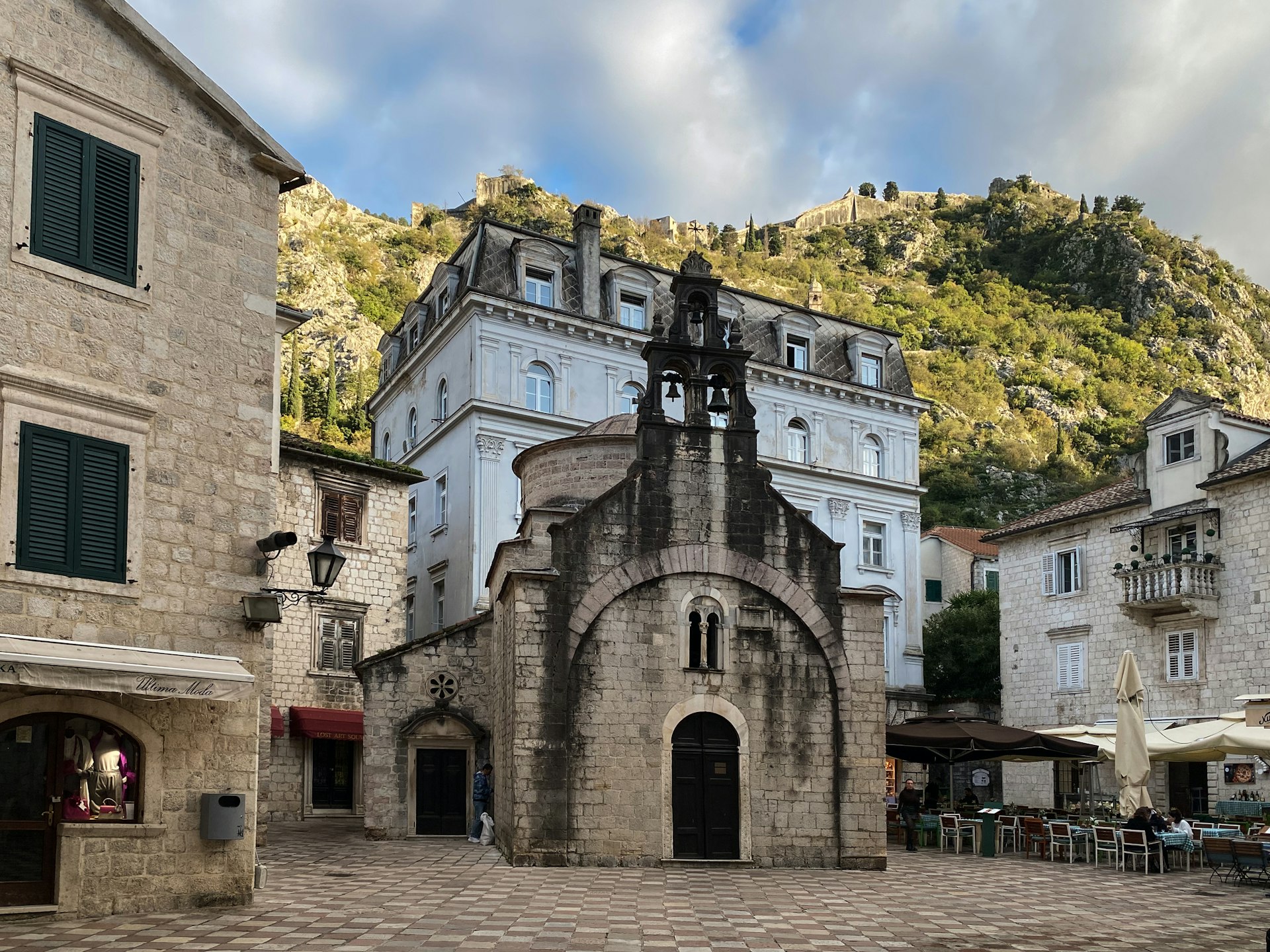
  • Saint Luke Church – unique Orthodox and Catholic coexistence | 30 min | free
  • 🏛️ Pima Palace – Venetian architecture and exhibition | 45 min | ~3€
  • Historic cafes of the Square of Arms – Montenegrin coffee tasting | free

Practical tip: Book your cathedral entry online in high season. Museums are rarely crowded in bad weather; take advantage.

Trick: Combine cathedral + maritime museum + Pima Palace in a half-day of complete cultural sightseeing.

☀️ In good weather

Outdoor and fresh air

When the sun illuminates the Bay of Kotor, the city reveals all its Adriatic splendor. It's time to climb, sail, and immerse yourself in unforgettable panoramas.

  • 🏰 Ramparts and Saint John Fortress – 1,350 steps, exceptional panorama | 2-3h | ~8€ | ideal early morning
  • Boka Kotorska Bay Cruise – Our Lady of the Rocks, Perast | 3-4h | ~20-30€ | May to October
  • 🏖️ Dobrota Beach – bay side, local atmosphere | 2h+ | free | June to September
  • 🚶 Serpentine Path – climb towards Lovćen, views of the bay | 3-4h | free | spring-autumn
  • 🌅 Panorama from Špiljari – sunset on the ramparts | 1h | included in ramparts ticket

Best time: Climb the ramparts from 8am before the heat and cruise groups. The photographic golden hour is superb from the fortress.

Season tip: May-June and September are ideal for outdoor visits. Avoid climbing the ramparts between 12pm and 4pm in July-August.

🌤️ Versatile for all weather

Flexible sites for all weather

Some sites in Kotor are enjoyed regardless of the weather, alternating between indoor discoveries and outdoor breaks depending on the clearings.

  • 🏙️ Intra-muros Old Town – alleys, squares, artisan shops | all day | free entry (paid parking)
  • 🛍️ Kotor Local Market – local products, cheeses, prosciutto | 1h | free | morning only
  • 🐱 Kotor Cat Route – feline tradition of the city, dedicated shops | 1-2h | free

Weather trick: Start with covered streets and museums if the sky is threatening, then enjoy the squares and viewpoints during clearings.

Typical itinerary: Market in the morning → cathedral visit → lunch on the Square of Arms terrace → ramparts if sunny → maritime museum if raining.

💰 Free or economical

Kotor without breaking the bank

Kotor remains accessible even on a tight budget. Many sites can be visited freely or at very low cost.

  • 🚶 Strolling in the old town – UNESCO heritage, free access | all day | free
  • Saint Luke Church – 12th-century architectural jewel | 30 min | free
  • 🌊 Bay-side walk – Dobrota and Muo on foot from the ramparts | 1-2h | free

Free days: Some museums offer reduced or free entry off-season. Inquire on-site.

Budget tips: Picnic with local market products, opt for accommodation outside the walls (Dobrota, Muo) which is cheaper, and eat where the locals eat.

Practical Guide

Preparing your stay in Kotor requires some adjustments depending on the chosen season. The differences in crowds and weather are significant between the intimate winter and the overloaded summer. Here are the keys to traveling comfortably and economically, regardless of the period.

👕 Seasonal packing

Spring (March-May): Waterproof walking shoes are essential for the ramparts • light waterproof jacket • layers • sunglasses starting in April

Summer (June-September): Very light cotton or linen clothing • high-factor sunscreen mandatory • wide-brimmed hat • comfortable sandals for cobblestones • light sweater for evenings at altitude

Autumn (October-November): High-performance raincoat • warm sweater • light waterproof boots • compact umbrella

Winter (December-February): Waterproof coat • non-slip waterproof shoes for slippery cobblestones • scarf and hat • several layers

Travel clothing and gear by season

💰 Seasonal budget

PeriodCenter Accommodation (€/night)Transport (€/day)Restaurants (€/day)Attractions (€)Crowds
Winter (Dec-Feb)30–605–1015–255–10
Spring (Mar-Apr)50–908–1520–3510–20⭐⭐
May – early June70–12010–2025–4015–25⭐⭐⭐
July – August100–20015–2530–5520–35⭐⭐⭐⭐⭐
September80–14010–2025–4515–25⭐⭐⭐
Autumn (Oct-Nov)40–755–1218–308–15⭐⭐

💡 Money-saving tips

1. Book early in summer: accommodations inside the walls sell out months in advance in July-August. Prefer Dobrota or Muo for rates 30-40% lower.
2. Eat like the locals: daily menus in restaurants off the tourist paths cost 6-10€ compared to 15-25€ on the main square.
3. Prioritize May or September: weather almost identical to summer with significantly lower prices and half the crowds.
4. Boat excursions: negotiate directly with local boatmen on the quay; prices can be 20-30% lower than agencies.
5. Public transport: local buses allow you to reach Budva, Tivat, and Herceg Novi for less than 2-3€ per trip.

🏥 Health and precautions

  • In summer, intensive hydration is essential: the ramparts are exposed to the sun and perceived temperatures in the enclosed old town often exceed 35°C (95°F)
  • Plan for SPF 50+ sunscreen and a hat for any summer outing
  • Ancient cobblestones are slippery in the rain: non-slip sole shoes recommended
  • In autumn and winter, heavy rains can cause rapid rises in the bay's level: check local weather alerts
  • Pharmacies available outside the walls, in the new city

Events in Kotor

Calendar of must-see events in Kotor

Events in Kotor punctuate the life of the city and radically transform its atmosphere, attracting crowds or creating unforgettable festive moments for lucky travelers.

🎭 Kotor Carnival (February)

One of the oldest traditions in the Balkans, the Kotor Carnival turns the medieval old town into an open-air theater. Venetian masks, baroque costumes, and music take over the alleys for several days, in a joyful and popular atmosphere that contrasts beautifully with the usual winter serenity of the city.

Location: Old town, Square of Arms (Trg od Oružja)

Feature: Multi-centennial tradition with Venetian influence, unique in the Balkans

Impact: The city fills up in a few days; book your accommodation 2 to 3 months in advance

Access: Bus from Budva, Podgorica, or Tivat. Tivat Airport is 8 km / 5 miles away

Tip: Book accommodation inside the walls by November, as they fill up quickly.

🎨 KotorArt Festival (July – August)

KotorArt is the major cultural festival of Kotor, blending classical music, jazz, theater, and visual arts in exceptional venues: courtyards of Venetian palaces, medieval squares, and illuminated ramparts. The nocturnal atmosphere of the festival, with the bay as a backdrop, is of rare beauty and is a powerful emotional experience.

Location: Old town, multiple stages, Square of Arms, Pima Palace courtyard

Feature: Concerts in a medieval setting with views of the illuminated walls

Impact: High attendance, especially during gala evenings; book tickets in advance

Access: Tivat Airport (8 km / 5 miles), shuttles from Budva and Podgorica

Tip: Book accommodation and tickets 3 to 4 months in advance, especially for July.

⚓ Boka Marine Festival – Bokeljska Night (August 22)

The Bokeljska Night is the most iconic popular event in the Bay of Kotor. This spectacular night festival celebrates the maritime tradition of the Boka Marine, with a parade of illuminated boats on the bay, fireworks, and folk dances. The atmosphere is electric and deeply rooted in local identity.

Location: Bay of Kotor, old town quays and surroundings

Feature: Parade of decorated boats on the bay, a tradition dating back to the Middle Ages

Impact: Very popular event; the bay is buzzing all night long

Access: On foot from Kotor, rent local boats to watch the parade from the bay

Tip: Arrive early to find a spot along the bay; book accommodation starting in June.

Seasonal events

Winter:

• Kotor Carnival (February – old town – popular festival) • Christmas Markets (December – Square of Arms – local festive atmosphere)

Spring:

• Opening of the tourist season (April-May – terraces and entertainment return gradually) • Feast of Saint Tryphon, patron saint of Kotor (February 3 – procession in the old town)

Summer:

• KotorArt Festival (July-August – old town – culture and music) • Bokeljska Night (August 22 – Bay of Kotor – maritime tradition) • Summer Carnival (July – street entertainment)

Autumn:

• Local neighborhood festivals (October – end-of-season entertainment) • Last evenings on the terrace (late September – lingering Mediterranean warmth)

Kotor, a responsible city-trip

Kotor is one of the cities most confronted with overtourism in the Eastern Mediterranean, particularly due to cruise ship stopovers. Choosing your visit period and adopting responsible practices means contributing directly to preserving this medieval jewel for future generations.

The old town of Kotor, a UNESCO site, suffers from intense tourist pressure in summer, exacerbated by the thousands of cruise passengers who disembark every day in July-August. Prioritize stays in local accommodation rather than day trips from a cruise ship. Buy crafts and local products in independent shops, limit your plastic waste, and respect the tranquility of permanent residents, who are becoming increasingly rare within the walls.

🌱 Low-season advantages

Visiting Kotor in May, June, or September rather than in mid-summer significantly reduces the pressure on the old town, allows for an authentic experience, contributes to the local economy outside peak saturation, and lightens the ecological footprint of your stay.

♻️ Sustainable travel tips

1. Soft transport: Walk or use local buses rather than taxis to connect Kotor to Budva, Tivat, or Perast.
2. Local dining: Favor konobas (local taverns) rather than tourist-facing restaurants.
3. Certified accommodation: Choose family guesthouses or locally managed guesthouses rather than large chains.
4. Waste reduction: Bring your reusable water bottle; tap water is drinkable in Kotor.
5. Alternative circuits: Explore Dobrota, Muo, and Perast to decongest the old town and support less-visited communities.
6. Staggered hours: Visit the old town early in the morning or in the evening to avoid the peak cruise passenger hours (10am-5pm).

🏙️ Local sustainable initiatives

The municipality of Kotor is working to limit the impact of cruise ships with stopover quotas. Local initiatives encourage cycling along the bay, local producer markets are organized on weekends, and several accommodations display eco-tourism labels promoting sustainable water and energy management.

Our recommendations

Recommendations for your city-trip to Kotor

After a complete analysis of the climate, crowds, and event calendar, May and June clearly stand out as the optimal months to visit Kotor. The weather is ideal for outdoor visits, accommodations are available at fair prices, and the old town regains a pleasant atmosphere without summer saturation. September is an excellent alternative for those who wish to enjoy the sea. Winter attracts travelers looking for authenticity and a smaller budget, especially around the February carnival.

🌟 Optimal period: May and June

Recommended months: May, June

  • Ideal temperatures between 14°C and 28°C (57°F – 82°F), perfect for the ramparts and the bay
  • Generous sunshine (9 to 11h/day) without excessive heat
  • Manageable tourist traffic, before the massive summer influx
  • Lush vegetation and sea already pleasant in June (22-24°C / 72-75°F)
  • Accommodation prices still reasonable compared to July-August

Events: Start of summer entertainment in June, first evenings on the terrace

Disadvantages: Increasing crowds in June, some rain possible in May

Ideal profile: Couples, families, photographers, cultural travelers, first-time visitors

Recommended duration: 3 to 5 days

🌊 Interesting alternative: September

Alternative months: Late August, September

September offers a perfect combination of sea that is still warm and decreasing crowds. Temperatures remain summery (17-27°C / 63-81°F), the sea is at 24°C (75°F), and prices start to drop after the high season. The Bokeljska Night in late August is an exceptional cultural bonus.

Specific advantages: Warm sea ideal for swimming, more relaxed atmosphere, falling prices, golden photographic light of early autumn

For whom: Beach and culture lovers, travelers seeking a balance between entertainment and tranquility, intermediate budgets

👥 Tips for your travel style

Family: May-June for climatic mildness and the safety of the ramparts. Stay in Dobrota for more space. Prefer the bay cruise and Dobrota beach.

Tight budget: November or March for the lowest prices. Family guesthouses outside the walls, local buses, lunch konobas.

Culture and history: April-May or October for light and tranquility. Cathedral, maritime museum, excursion to Perast and Our Lady of the Rocks.

Romantic: June or September, sunset from the ramparts, dinner on a terrace with a bay view, private boat excursion.

Weekend: May or June from major cities (direct flights or via Dubrovnik). 3 nights are enough for the essentials of the old town and the bay.

First trip: Late May or early June, accommodation intra-muros or Dobrota, full ramparts + museums pass, bay excursion included.

⚠️ Periods to consider carefully

Months generally not recommended: July, August, November, December

Reasons: July-August: extreme saturation of the old town due to cruises (up to 10,000 cruise passengers/day), prohibitive prices, stifling heat in the narrow alleys. November-December: very heavy rains, many sites and restaurants closed, very short days.

Nuances: July-August remain essential for beach lovers, festivals (KotorArt), and lively nightlife; December is worth it for Christmas festivities if you accept the uncertain weather. February is enhanced by the carnival despite the winter.

Villes du même pays

All cities

Frequently Asked Questions

Here are the answers to essential questions to plan your stay in Kotor according to the weather, your budget, and your travel desires.

What is the best month to visit Kotor?

May and June are the ideal months to visit Kotor. Temperatures range between 14°C and 28°C (57°F – 82°F), the sun shines 9 to 11 hours a day, and rainfall is rare. The old town is lively without being saturated by summer cruise ship crowds. September is an excellent alternative with a sea that is still warm (24°C / 75°F) and significantly lower tourist numbers. If you enjoy crowds and beaches, July-August remains the high season, but be prepared to book very early and pay more.

How many days should I plan for visiting Kotor?

Kotor is a small medieval city that can be explored in 3 to 5 days depending on your pace. Two days are enough for the highlights: old town, ramparts, and Saint John's Fortress. But to fully enjoy the Boka Bay, an excursion to Perast, a beach day, and local dinners, plan for 4 to 5 nights. Hiking or photography enthusiasts will appreciate a few extra days to explore the heights of Mount Lovćen and the surrounding villages.

What to do in Kotor when it rains?

Rain does not ruin a stay in Kotor! Saint Tryphon Cathedral, the Maritime Museum of Montenegro, and the Pima Palace will easily occupy you for half a day. Take the opportunity to linger in a typical konoba over a plate of local ham and cheese. The covered alleys of the old town can be navigated without getting too wet, and the cafes on the Square of Arms are cozy and authentic. Rain also offers beautiful photographic light on the reflective cobblestones of the medieval city.

Which events should not be missed in Kotor?

Three events stand out in Kotor. The Kotor Carnival in February is one of the oldest in the Balkans and creates a unique festive atmosphere in the old town. The KotorArt festival in July-August offers classical and jazz music concerts in unforgettable medieval settings. Finally, the Bokeljska Night on August 22 celebrates the bay's maritime tradition with a spectacular parade of illuminated boats on the Adriatic. Book accommodation and tickets several months in advance for these three events.

What budget should I plan for Kotor depending on the season?

The budget varies significantly by season. In winter, expect 50-80€/day per person (accommodation + meals + activities). In spring (April-May), plan for 80-120€/day for a comfortable experience. In summer (July-August), the budget climbs to 130-200€/day, especially for accommodation in the old town, which can exceed 150€/night. In September, you get spring prices with summer conditions. To save money, sleep in Dobrota or Muo, eat lunch in local konobas, and use buses instead of taxis.